Can a Sprinkler Tanker be used for irrigation?
As a supplier of Sprinkler Tankers, I often get asked whether these vehicles can be effectively used for irrigation purposes. In this blog post, I'll delve into the feasibility, advantages, limitations, and considerations when using a Sprinkler Tanker for irrigation.
Feasibility of Using a Sprinkler Tanker for Irrigation
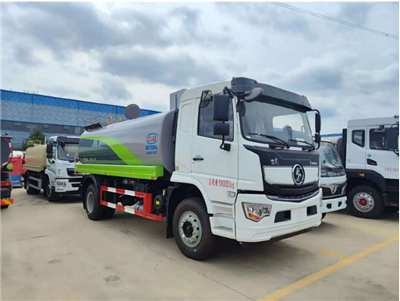
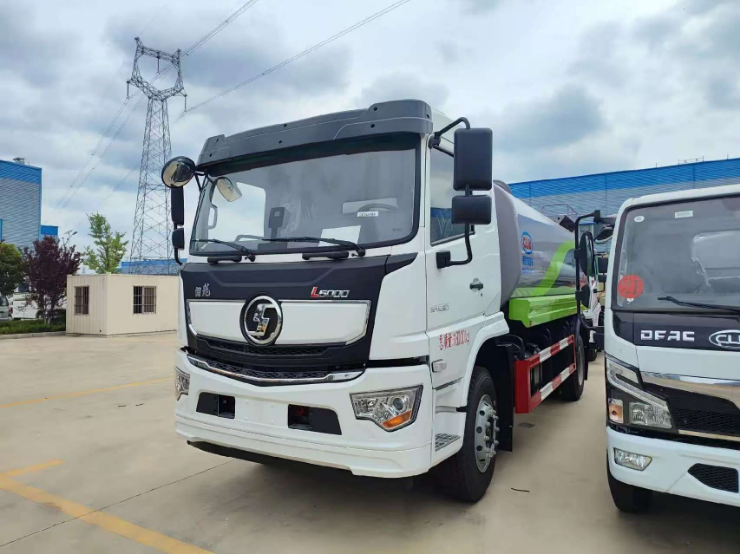
Sprinkler Tankers, also known as Sprinkler Trucks, are primarily designed to carry and distribute water over a large area. Their basic functionality makes them a potential candidate for irrigation tasks. These trucks are equipped with a water tank, a pumping system, and a set of sprinklers or nozzles that can disperse water in a controlled manner.
The key to their feasibility lies in their mobility and the ability to cover a relatively large area quickly. In agricultural settings, especially in large farms or orchards, a Sprinkler Tanker can move around the fields, delivering water precisely where it's needed. This is particularly useful in areas where traditional irrigation systems, such as fixed sprinklers or drip irrigation, are not practical or have not been installed.
Advantages of Using a Sprinkler Tanker for Irrigation
1. Mobility
One of the most significant advantages of a Sprinkler Tanker is its mobility. Unlike fixed irrigation systems, a Sprinkler Tanker can be driven to different parts of a farm or garden. This is extremely beneficial for irregularly shaped fields or areas with varying water requirements. For example, in a large vineyard, different sections may need different amounts of water at different times. A Sprinkler Tanker can easily adapt to these variations by adjusting its route and the amount of water it dispenses.
2. Quick Setup
Setting up a Sprinkler Tanker for irrigation is relatively quick compared to installing a permanent irrigation system. There's no need for extensive digging, laying pipes, or installing complex control systems. All you need is a fully - loaded tanker and a driver to operate it. This makes it an ideal solution for temporary irrigation needs, such as during a drought or for a new crop that requires immediate watering.
3. Cost - Effective for Small to Medium - Sized Areas
For small to medium - sized farms or gardens, purchasing and maintaining a large - scale fixed irrigation system can be expensive. A Sprinkler Tanker, on the other hand, offers a more cost - effective alternative. You can rent or purchase a tanker at a relatively low cost, and the operating costs are also manageable. Additionally, if you only need irrigation for a short period, a Sprinkler Tanker can be a more economical choice.

4. Versatility
Sprinkler Tankers can be used for various types of irrigation. They can be adjusted to provide a fine mist for delicate plants or a more powerful spray for larger crops. Some tankers are also equipped with adjustable nozzles that can change the spray pattern, allowing for more precise irrigation.
Limitations of Using a Sprinkler Tanker for Irrigation
1. Limited Water Capacity
The water capacity of a Sprinkler Tanker is limited. Depending on the size of the tanker, it may need to be refilled frequently, especially when irrigating large areas. This can be time - consuming and may disrupt the irrigation process. For example, a small - sized Sprinkler Tanker may only hold a few cubic meters of water, which may not be sufficient for a large farm.
2. Weather Dependence
The effectiveness of a Sprinkler Tanker for irrigation can be affected by weather conditions. Strong winds can blow the water off - target, reducing the efficiency of the irrigation. High temperatures can also cause the water to evaporate quickly before it reaches the plants. In such cases, the amount of water actually reaching the soil may be less than what is needed.
3. Labor - Intensive
Operating a Sprinkler Tanker requires a driver and, in some cases, additional personnel to monitor the irrigation process. This can be labor - intensive, especially for large - scale irrigation projects. Moreover, the driver needs to have a good understanding of the terrain and the water requirements of the plants to ensure proper irrigation.
Considerations When Using a Sprinkler Tanker for Irrigation
1. Water Source
Before using a Sprinkler Tanker for irrigation, you need to have a reliable water source. This can be a well, a river, or a water storage tank. The water source should be clean and free from contaminants that could harm the plants. Additionally, the water source should be easily accessible for refilling the tanker.
2. Plant Type
Different plants have different water requirements. Some plants, such as succulents, need less water, while others, like rice, require a large amount of water. When using a Sprinkler Tanker for irrigation, you need to adjust the amount and frequency of watering according to the plant type.
3. Terrain
The terrain of the area to be irrigated is also an important consideration. A Sprinkler Tanker may have difficulty navigating rough or hilly terrain. In such cases, the water distribution may not be uniform, and the tanker may be at risk of getting stuck.
Conclusion
In conclusion, a Sprinkler Tanker can indeed be used for irrigation, and it offers several advantages, such as mobility, quick setup, cost - effectiveness, and versatility. However, it also has some limitations, including limited water capacity, weather dependence, and labor - intensity. When considering using a Sprinkler Tanker for irrigation, it's important to take into account factors such as the water source, plant type, and terrain.
If you're interested in exploring the possibility of using a Sprinkler Tanker for your irrigation needs, I encourage you to reach out. Our company offers a wide range of high - quality Sprinkler Tankers that can be customized to meet your specific requirements. Whether you're a small - scale farmer or a large - scale agricultural enterprise, we can provide the right solution for you. Contact us today to start a discussion about your irrigation needs and how our Sprinkler Tankers can help.
References
- Agricultural Irrigation Handbook: A comprehensive guide on different irrigation methods and their applications.
- Sprinkler System Design and Installation Manual: Provides detailed information on the design and operation of sprinkler - based irrigation systems.
- Water Management in Agriculture: Discusses the importance of efficient water use in agricultural irrigation.