


Hey there! As a supplier of concrete mixer trucks, I often get asked a bunch of questions about these beasts of machines. One question that pops up quite a bit is, "What is the maximum angle at which a concrete mixer truck can discharge concrete?" Well, let's dive right into it.
First off, it's important to understand the basic setup of a concrete mixer truck. You've got this big drum on the back that rotates to keep the concrete all mixed up and ready to go. When it's time to unload the concrete, the drum rotates in the opposite direction, and the concrete slides out through a chute.
The maximum discharge angle of a concrete mixer truck isn't a one - size - fits - all number. It depends on several factors. One of the main factors is the design of the truck itself. Different models have different geometries, and this can affect how steep an angle the truck can safely discharge at.
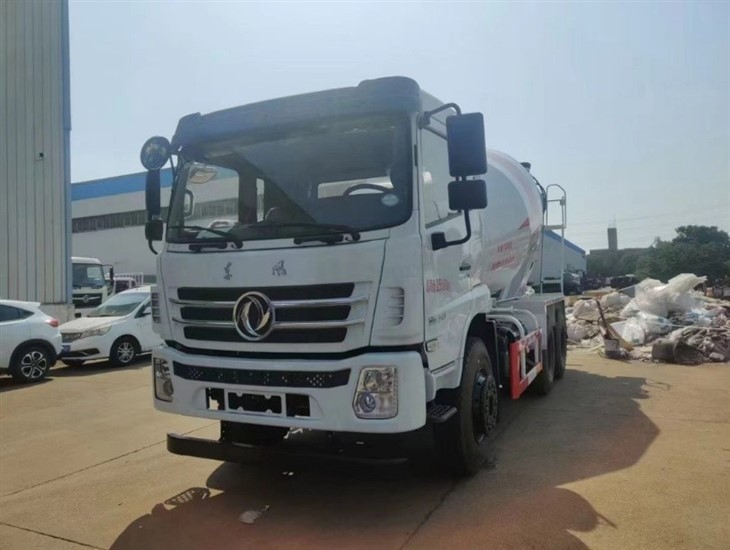
For example, the Dongfeng D17 Engineering Mixer Truck is designed with a specific set of features that influence its discharge angle. This truck has a well - engineered drum and chute system. The drum's shape and the way it's mounted on the chassis play a role in determining the maximum angle. A well - designed drum will allow the concrete to flow smoothly out of the truck, even at relatively steep angles.
Another factor is the type of concrete being used. Concrete comes in different consistencies, from very fluid to more stiff. Fluid concrete will flow more easily at steeper angles compared to stiffer concrete. If you're using a high - slump concrete, which is more fluid, you might be able to discharge it at a greater angle. But if you've got a low - slump concrete, which is thicker, you'll need a shallower angle to ensure a proper flow.
The length and design of the chute also matter. A longer chute can sometimes allow for a steeper discharge angle because it gives the concrete more distance to travel before it reaches the ground. However, if the chute is too long or not properly supported, it can cause problems. The concrete might start to build up in the chute, leading to blockages or uneven discharge.
Now, let's talk about safety. Safety is always a top priority when operating a concrete mixer truck. Discharging concrete at an angle that's too steep can be dangerous. It can cause the truck to become unstable, especially if the load is heavy. If the truck tips over during the discharge process, it can lead to serious injuries and damage to the equipment.
Most manufacturers recommend a maximum discharge angle in the range of 45 to 60 degrees. But this is just a general guideline. Some trucks, like the Concrete Agi Truck, might be able to handle slightly steeper angles, while others might have a lower limit.
It's also important to consider the site conditions. If the ground where you're discharging the concrete is uneven or soft, it can affect the truck's stability. You might need to adjust the discharge angle to compensate for these conditions. For example, if the ground is sloping, you'll need to make sure the truck is positioned correctly and that the discharge angle is adjusted so that the concrete goes where it's supposed to.
When it comes to actually operating the truck, the driver's skill and experience play a huge role. An experienced driver will know how to adjust the discharge angle based on all the factors we've talked about. They'll be able to tell if the concrete is flowing properly and if the truck is stable. They'll also know when to stop and make adjustments if something isn't right.

In addition to the physical factors, there are also regulatory requirements to consider. Different regions might have specific rules about the maximum discharge angle of concrete mixer trucks. These regulations are in place to ensure the safety of workers and the public. So, it's important to be aware of and comply with these rules.
Let's take a closer look at how the design of the drum affects the discharge angle. The drum's internal blades are crucial. These blades are designed to move the concrete around inside the drum as it rotates. When it's time to discharge, the blades need to be able to push the concrete out smoothly. If the blades are worn or not properly designed, the concrete might not flow as well, and you might have to use a shallower discharge angle.
The shape of the drum also matters. A drum with a more tapered shape can sometimes allow for a steeper discharge angle because it helps to funnel the concrete towards the chute. On the other hand, a drum with a more cylindrical shape might require a shallower angle to ensure proper flow.
The type of drive system on the truck can also have an impact. Trucks with a more powerful and efficient drive system can better handle the stress of discharging concrete at steeper angles. A weak drive system might struggle to rotate the drum at the right speed when the discharge angle is steep, leading to uneven discharge or even blockages.
So, to sum it all up, there isn't a single, definitive answer to the question of the maximum discharge angle of a concrete mixer truck. It depends on the truck's design, the type of concrete, the chute, site conditions, driver skill, and regulatory requirements.
If you're in the market for a concrete mixer truck, it's important to do your research. Look at different models and their specifications. Talk to other contractors or operators who have experience with these trucks. And if you have any questions about the maximum discharge angle or any other aspect of the truck, don't hesitate to reach out to us. We're here to help you make the right choice for your construction needs. Whether you're working on a small residential project or a large commercial development, we've got the right concrete mixer truck for you. Contact us to start the procurement process and let's have a chat about how we can meet your requirements.
References
- Construction Equipment Handbook
- Concrete Mixer Truck Manufacturer Manuals


