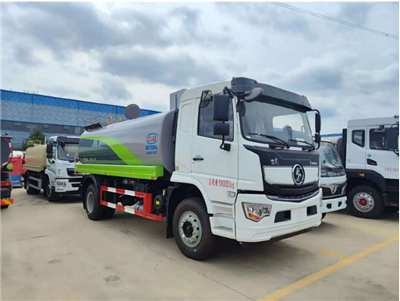
Are foam fire trucks used in power plant fires?
As a supplier of foam fire trucks, I often get asked about the effectiveness and applicability of our products in various fire - fighting scenarios, especially in power plant fires. In this blog, I'll explore whether foam fire trucks are a suitable choice for power plant fires and why.
Power plants are critical infrastructure that generate electricity to meet the energy needs of industries and households. Fires in power plants can be extremely dangerous, with potential to cause massive disruptions to the power supply, damage expensive equipment, and pose serious risks to the safety of workers. These fires can be caused by a variety of factors, such as electrical malfunctions, oil leaks, or problems in the fuel storage areas.
Types of Fires in Power Plants
There are mainly three types of fires that can occur in power plants: Class A, Class B, and Class C fires.
Class A fires involve ordinary combustibles like wood, paper, and cloth. Although power plants are not typically filled with these materials, there may be areas in the administrative buildings or storage areas where such fires can break out.
Class B fires are fueled by flammable liquids such as oil, gasoline, and solvents. Power plants often have large quantities of lubricating oil, transformer oil, and fuel oil stored on - site. A leak or spill of these liquids can easily lead to a Class B fire.
Class C fires are electrical fires. Given the high - voltage electrical systems present in power plants, electrical short - circuits or malfunctions can result in fires. These fires require special extinguishing agents that do not conduct electricity.


How Foam Fire Trucks Work
Foam fire trucks are equipped with foam - generating systems. The foam is created by mixing a foam concentrate with water and air. The resulting foam has several properties that make it an effective fire - fighting agent.
Firstly, the foam forms a blanket over the burning surface. This blanket cuts off the oxygen supply to the fire, preventing it from spreading. Secondly, the foam cools the burning material. The water in the foam absorbs heat from the fire, reducing the temperature of the fuel and the surrounding area. Thirdly, for Class B fires, the foam can prevent the evaporation of the flammable liquid, further suppressing the fire.
Suitability of Foam Fire Trucks for Power Plant Fires
For Class A Fires
Foam fire trucks can be very effective in extinguishing Class A fires in power plants. The foam can quickly cover the burning material, smother the flames, and prevent re - ignition. The cooling effect of the foam also helps to reduce the heat and prevent the fire from spreading to adjacent areas. For example, if there is a fire in a storage area with wooden pallets or cardboard boxes, a foam fire truck can be dispatched to quickly control the situation.
For Class B Fires
This is where foam fire trucks truly shine. The foam is specifically designed to deal with flammable liquid fires. In power plants, where there are large amounts of oil and other flammable liquids, a foam fire truck can be the first line of defense. The foam can float on the surface of the burning liquid, preventing the release of flammable vapors and extinguishing the fire. For instance, in case of an oil spill in a transformer yard, a foam fire truck can quickly arrive on the scene and apply the foam to suppress the fire.
For Class C Fires
However, when it comes to Class C fires, caution must be exercised. Traditional water - based foams are conductive and should not be used on live electrical fires. But there are special types of non - conductive foams available that can be used in these situations. These non - conductive foams allow foam fire trucks to be used to extinguish electrical fires safely.
Advantages of Using Foam Fire Trucks in Power Plants
- Versatility: Foam fire trucks can handle multiple types of fires, making them a valuable asset in power plants. They can be used for both Class A and Class B fires, and with the right foam, even for Class C fires.
- Fast - acting: Foam can be deployed quickly, allowing for rapid fire suppression. This is crucial in power plants where every second counts to prevent major damage.
- Reduced water damage: Compared to using large volumes of water to extinguish fires, foam can be more effective with less water. This reduces the potential for water damage to the power plant equipment.
Our Foam Fire Truck Offerings
At our company, we offer a wide range of foam fire trucks, including the Foam Fire Truck. Our trucks are built with high - quality materials and advanced foam - generating technology. They are designed to be reliable, easy to operate, and efficient in fire - fighting operations.
One of our popular models is the Sinotruk HOWO 16 - ton Pumper - Tanker. This truck combines the features of a pumper and a tanker, with a large - capacity water tank and a powerful foam - generating system. It is suitable for use in power plants, as it can quickly respond to fires and carry enough water and foam to handle large - scale fire situations.
Conclusion
In conclusion, foam fire trucks are indeed a viable and effective option for power plant fires. Their ability to handle different types of fires, fast - acting nature, and reduced water - damage potential make them an ideal choice for protecting power plant facilities.
If you are responsible for the fire - safety management of a power plant or any other industrial facility, considering the purchase of a foam fire truck is a wise decision. Our team of experts is ready to assist you in choosing the right fire - fighting equipment for your specific needs. Whether you have questions about the technical specifications, performance, or maintenance of our foam fire trucks, we are here to help. Reach out to us to start a discussion about your fire - safety requirements and let's work together to ensure the safety of your facility.
References
- National Fire Protection Association (NFPA) standards related to power plant fire protection
- Fire Protection Handbook, various editions