


Hey there! As a supplier of Foam Fire Trucks, I've spent a good amount of time thinking about how the foam we use affects the environment. It's a topic that's super important, not just for us in the fire - fighting industry but for everyone on this planet. So, let's dig into it.
What is Fire - Fighting Foam?
Fire - fighting foam is a special mixture that we use in our Foam Fire Trucks to put out fires. It's made up of water, a foam concentrate, and air. When these three things come together, they form bubbles that can cover a fire, cutting off its oxygen supply and cooling it down. There are different types of foam, like protein - based foam, fluoroprotein foam, and synthetic foam. Each type has its own uses and properties.
The Good Side of Foam in Fire - Fighting
First off, let's talk about why foam is so great for fighting fires. Foam is way more effective than just using water in many cases. For example, when dealing with flammable liquid fires, like gasoline or oil fires, water just spreads the fire around. But foam can float on top of these liquids, creating a barrier that stops the fire from spreading and reigniting.
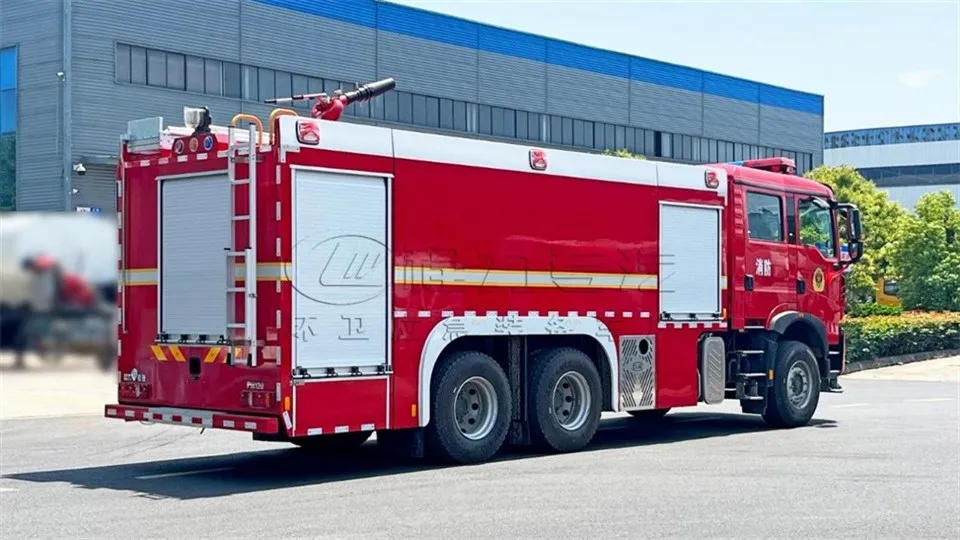
Our Sinotruk HOWO 16 - ton Pumper - Tanker is equipped with high - quality foam systems that can quickly deploy foam to handle large - scale fires. This means we can save lives and property more efficiently, which is the main goal of our fire - fighting operations.
The Environmental Concerns
However, the use of foam isn't all sunshine and rainbows. There are some serious environmental issues associated with it, especially when it comes to certain types of foam.

Persistent Organic Pollutants (POPs)
A lot of traditional fire - fighting foams contain per - and polyfluoroalkyl substances (PFAS). These are a group of man - made chemicals that are extremely persistent in the environment. They don't break down easily, which means they can stay in the soil, water, and air for a really long time.
PFAS can contaminate water sources. When foam is used during a fire - fighting operation, it can run off into nearby rivers, lakes, or groundwater. Once in the water, PFAS can be taken up by plants and animals. These chemicals can bioaccumulate, which means they build up in the bodies of organisms over time. This can have a big impact on the food chain. For example, small fish might absorb PFAS from the water. Then, bigger fish eat the small fish, and the PFAS levels in the bigger fish become even higher. Eventually, humans who eat these fish can also be exposed to PFAS.
Impact on Soil Quality
Foam can also affect the quality of the soil. When foam seeps into the soil, it can change the soil's physical and chemical properties. Some of the chemicals in the foam can make the soil more acidic or alkaline, which can harm plants and soil organisms. This can disrupt the natural ecosystem in the area.
Air Pollution
During the application of foam, some of the chemicals in the foam can volatilize and enter the air. This can contribute to air pollution. In addition, when the foam is used in large - scale industrial fires, there might be other pollutants released along with the foam, which can have a combined negative impact on air quality.
What Can We Do?
As a Foam Fire Truck supplier, we're aware of these environmental concerns, and we're taking steps to address them.
Using Environmentally - Friendly Foams
We're constantly researching and developing new types of fire - fighting foams that are more environmentally friendly. These new foams are designed to be biodegradable, which means they can break down naturally in the environment without leaving behind harmful residues. They also have lower levels of PFAS or are completely PFAS - free.
Proper Disposal and Clean - up
We're also educating our customers on the proper disposal and clean - up of foam after a fire - fighting operation. This includes collecting and treating the used foam to remove as many pollutants as possible before it's released into the environment. We're working on developing better clean - up technologies to make this process more efficient.
Training and Awareness
We're providing training to fire - fighting teams on the environmental impact of foam and how to use it in a more sustainable way. By raising awareness, we hope to encourage more responsible use of foam in fire - fighting operations.
Conclusion
So, there you have it. Foam is a powerful tool in fire - fighting, but it also has a significant impact on the environment. As a Foam Fire Truck supplier, we're committed to finding a balance between effective fire - fighting and environmental protection.
If you're in the market for a reliable and environmentally - conscious Foam Fire Truck, don't hesitate to reach out to us. We're here to provide you with the best solutions for your fire - fighting needs. Whether it's for a small local fire department or a large industrial facility, we've got you covered. Let's work together to protect lives, property, and our precious environment.
References
- "Per - and Polyfluoroalkyl Substances (PFAS) in the Environment: A Review of Sources, Fate, and Transport." Journal of Environmental Science and Health, Part C: Environmental Carcinogenesis & Ecotoxicology Reviews.
- "The Impact of Fire - Fighting Foam on Soil and Water Quality." International Journal of Environmental Research and Public Health.
- "Sustainable Fire - Fighting Foams: A New Approach to Protecting the Environment." Fire Technology Journal.


