


Foam fire trucks are essential in firefighting operations, especially when dealing with flammable liquid fires. One crucial aspect of their functionality is the regulation of foam temperature. As a supplier of Foam Fire Truck, I'd like to delve into the science and methods behind foam temperature regulation in these specialized vehicles.
The Importance of Foam Temperature Regulation
The temperature of the foam used in a fire truck can significantly impact its effectiveness. Foam is designed to create a barrier between the fuel and the oxygen, smothering the fire. However, if the foam temperature is too high or too low, its properties can change, reducing its ability to suppress the fire.

When the foam is too hot, it can evaporate more quickly, losing its ability to form a stable barrier. This can lead to the re - ignition of the fire. On the other hand, if the foam is too cold, it may become too viscous, making it difficult to spread evenly over the fire area. It may also not mix properly with the air, resulting in a less effective foam structure.
Factors Affecting Foam Temperature
Several factors can influence the foam temperature in a fire truck. The ambient temperature is one of the most obvious factors. In hot climates, the foam can heat up quickly, especially if the fire truck is parked in direct sunlight. Conversely, in cold climates, the foam can become too cold, affecting its performance.
The heat generated during the firefighting process itself can also impact the foam temperature. As the foam is discharged onto a burning surface, it absorbs heat from the fire. If the fire is particularly intense, this can cause the foam temperature to rise rapidly.
The type of foam concentrate used also plays a role. Different foam concentrates have different thermal properties. Some are more resistant to temperature changes than others, and their performance can vary depending on the temperature conditions.
Methods of Foam Temperature Regulation
Insulation
One of the simplest ways to regulate foam temperature is through insulation. Fire trucks can be equipped with insulated foam tanks to minimize the impact of ambient temperature. High - quality insulation materials can reduce heat transfer between the foam and the outside environment. For example, using polyurethane foam insulation can provide excellent thermal resistance, keeping the foam at a more stable temperature.
Cooling Systems
In hot environments, cooling systems can be employed to maintain the foam at an optimal temperature. One common method is the use of refrigeration units. These units can be installed in the fire truck to cool the foam in the tank. The refrigeration system works by removing heat from the foam, similar to how a refrigerator cools food.
Another cooling method is the use of heat exchangers. A heat exchanger can transfer heat from the foam to a coolant, such as water or a refrigerant. The coolant then dissipates the heat outside the fire truck. This method is efficient and can be adjusted according to the foam temperature requirements.
Heating Systems
In cold climates, heating systems are necessary to prevent the foam from becoming too cold. Electric heating elements can be installed in the foam tank to warm the foam. These elements can be controlled to maintain a specific temperature range. For example, they can be set to turn on when the foam temperature drops below a certain level and turn off when it reaches the desired temperature.
Hot water circulation systems can also be used for heating. Hot water can be circulated through pipes surrounding the foam tank, transferring heat to the foam. This method is effective and can be integrated with the fire truck's existing water supply system.
Monitoring and Control
To ensure effective foam temperature regulation, it is essential to have a monitoring and control system in place. Temperature sensors can be installed in the foam tank to continuously measure the foam temperature. These sensors can provide real - time data on the foam temperature, allowing the firefighter to monitor the situation.
The data from the temperature sensors can be sent to a control panel in the fire truck. The control panel can then automatically adjust the cooling or heating systems based on the measured temperature. For example, if the foam temperature is too high, the control panel can activate the cooling system, and if it is too low, it can turn on the heating system.
Our Offerings: Sinotruk HOWO 16 - ton Pumper - Tanker
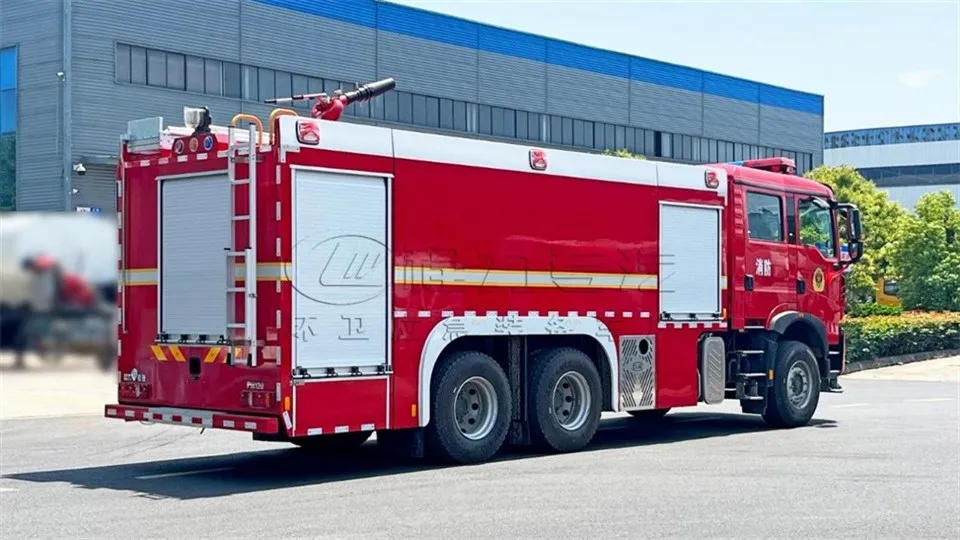
As a supplier of foam fire trucks, we understand the importance of foam temperature regulation. Our Sinotruk HOWO 16 - ton Pumper - Tanker is equipped with state - of - the - art foam temperature regulation systems. It features high - quality insulation in the foam tank to minimize the impact of ambient temperature. Additionally, it is fitted with both cooling and heating systems that can be precisely controlled to maintain the foam at an optimal temperature.
The monitoring and control system in our Sinotruk HOWO 16 - ton Pumper - Tanker allows firefighters to easily monitor the foam temperature and make adjustments as needed. This ensures that the foam is always in the best condition for firefighting, regardless of the environmental conditions.
Conclusion
Foam temperature regulation is a critical aspect of foam fire truck functionality. By understanding the factors that affect foam temperature and implementing appropriate regulation methods, we can ensure that the foam performs effectively in firefighting operations. As a supplier of Foam Fire Truck, we are committed to providing high - quality fire trucks with advanced foam temperature regulation systems.
If you are interested in our products and would like to discuss your specific requirements for a foam fire truck, please feel free to contact us for procurement and negotiation. We look forward to working with you to meet your firefighting needs.
References
- "Firefighting Foam Handbook" by the National Fire Protection Association (NFPA).
- "Thermal Properties of Firefighting Foams" published in the Journal of Fire Science and Technology.
- Technical manuals of various fire truck manufacturers.


