


When it comes to fire safety and emergency response, foam fire trucks play a crucial role. As a dedicated supplier of Foam Fire Truck, I often get asked a very practical question: "How many firefighters can a foam fire truck carry?" This question is not just about the number of seats inside the vehicle; it encompasses various factors related to safety, functionality, and operational requirements. In this blog, I'll delve into the details to provide a comprehensive answer.
Understanding the Basics of Foam Fire Trucks
Before we discuss the number of firefighters a foam fire truck can carry, it's essential to understand what these trucks are and what they do. Foam fire trucks are specialized vehicles designed to combat fires, especially those involving flammable liquids such as oil, gasoline, and chemicals. They are equipped with a foam generation system that can produce different types of foam, depending on the nature of the fire.
The primary components of a foam fire truck include a water tank, a foam concentrate tank, a pump, a foam proportioning system, and hoses. These components work together to deliver a precise mixture of water and foam to the fire scene. The size and capacity of these components can vary significantly from one truck to another, depending on the intended use and the manufacturer's specifications.
Factors Affecting the Number of Firefighters
Several factors influence the number of firefighters a foam fire truck can carry. Let's take a closer look at each of these factors:
1. Truck Design and Configuration
The design and configuration of the foam fire truck are the most significant factors determining the number of seats available. Fire trucks come in various sizes and layouts, from small, maneuverable vehicles to large, heavy-duty trucks. The number of seats can range from as few as two to as many as ten or more.
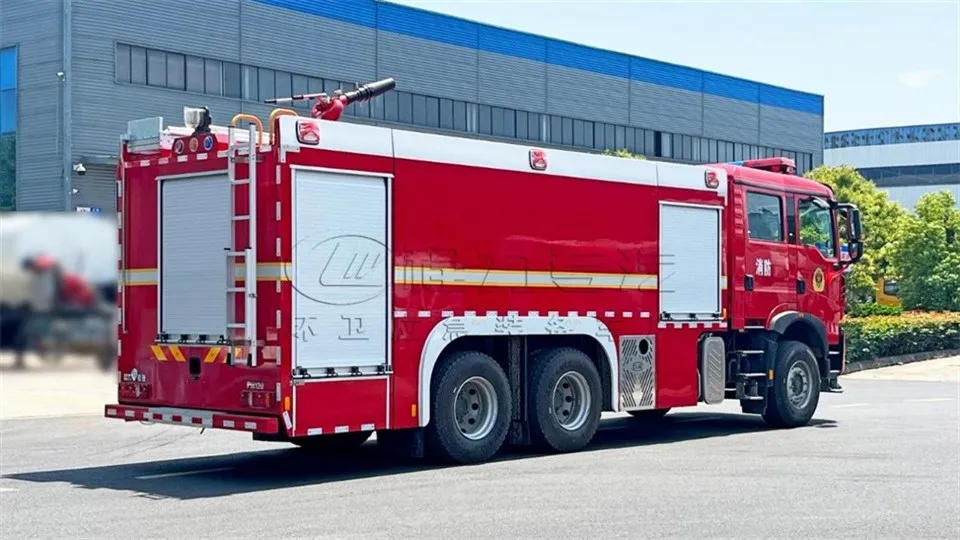
For example, some smaller foam fire trucks are designed for quick response in urban areas or for use in specialized applications. These trucks may have a cab with two or three seats, allowing for a driver and one or two firefighters. On the other hand, larger foam fire trucks, such as the Sinotruk HOWO 16 - ton Pumper - Tanker, are built to carry a larger crew. These trucks often have a crew cab with multiple rows of seats, providing space for six to ten firefighters.
2. Safety Regulations
Safety regulations also play a crucial role in determining the number of firefighters a foam fire truck can carry. These regulations are put in place to ensure the safety of the firefighters and the public. They specify the minimum amount of space required per passenger, the type of seating and restraint systems, and other safety features.
In many countries, fire trucks must comply with strict safety standards set by government agencies or industry organizations. For example, the seats in a fire truck must be designed to withstand the forces of sudden stops and impacts. They must also be equipped with seat belts to prevent passengers from being thrown around in the event of an accident.
3. Equipment and Storage Requirements
Foam fire trucks are not just transportation vehicles; they are also mobile fire - fighting stations. They need to carry a wide range of equipment, including hoses, ladders, tools, and personal protective equipment (PPE). The amount of equipment carried on the truck can affect the available space for firefighters.
For instance, if a truck is equipped with a large amount of specialized equipment, such as a high - reach ladder or a heavy - duty foam generator, it may have less space for seats. In some cases, the equipment may be stored in compartments that take up space inside the cab, reducing the number of available seats.
4. Operational Requirements
The operational requirements of the fire department also influence the number of firefighters a foam fire truck can carry. Different types of fires and emergency situations may require different numbers of firefighters.
For example, a small brush fire in a rural area may only require a small crew of two or three firefighters. However, a large industrial fire involving flammable liquids may require a much larger crew to operate the foam system, deploy hoses, and perform other fire - fighting tasks. Fire departments need to consider these operational requirements when choosing a foam fire truck and determining the appropriate number of seats.
Typical Capacity Ranges
Based on the factors mentioned above, we can provide some general guidelines on the typical number of firefighters a foam fire truck can carry:
Small Foam Fire Trucks
Small foam fire trucks, often used for quick response in urban areas or for specialized applications, typically carry 2 - 3 firefighters. These trucks are designed to be maneuverable and can quickly reach the fire scene. They are usually equipped with basic fire - fighting equipment and a smaller foam system.
Medium - Sized Foam Fire Trucks
Medium - sized foam fire trucks are more common in many fire departments. They can carry 4 - 6 firefighters and are suitable for a wide range of fire - fighting tasks. These trucks have a larger water and foam capacity and are often equipped with more advanced fire - fighting equipment.
Large Foam Fire Trucks
Large foam fire trucks, such as the Sinotruk HOWO 16 - ton Pumper - Tanker, can carry 6 - 10 firefighters. These trucks are designed for large - scale fires, especially those involving industrial facilities or large - volume flammable liquids. They have a high - capacity water and foam system and are equipped with a comprehensive range of fire - fighting equipment.
Importance of the Right Crew Size
Having the right number of firefighters on a foam fire truck is crucial for effective fire - fighting operations. A crew that is too small may not be able to handle the fire - fighting tasks efficiently, while a crew that is too large may lead to overcrowding and safety issues.
A well - sized crew can ensure that all the necessary tasks are carried out smoothly. For example, some firefighters can operate the foam system, while others can deploy hoses, perform search and rescue operations, and provide support to the incident commander. The right crew size also allows for better communication and coordination among the firefighters, which is essential for a successful fire - fighting operation.
Conclusion
In conclusion, the number of firefighters a foam fire truck can carry depends on several factors, including the truck's design and configuration, safety regulations, equipment and storage requirements, and operational needs. Small foam fire trucks typically carry 2 - 3 firefighters, medium - sized trucks can carry 4 - 6 firefighters, and large trucks can carry 6 - 10 firefighters.
As a supplier of foam fire trucks, I understand the importance of choosing the right vehicle for your fire department's needs. Whether you need a small, agile truck for urban response or a large, heavy - duty truck for industrial fires, we have a wide range of options to meet your requirements.

If you're interested in learning more about our foam fire trucks or would like to discuss your specific needs, please don't hesitate to contact us. We're here to help you make the best decision for your fire - fighting operations and ensure the safety of your firefighters and the public.
References
- National Fire Protection Association (NFPA) Standards
- Fire Truck Manufacturers' Association Publications
- Local Fire Department Operational Guidelines


