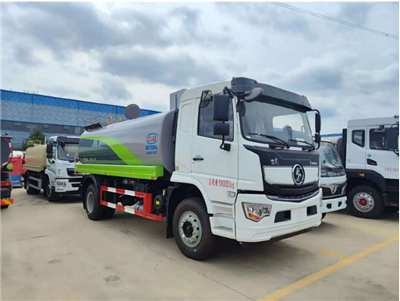
Hey there! I'm a supplier of sewage trucks, and today I wanna talk about the level sensors in sewage trucks. These little gadgets are super important, and I'll tell you why.
First off, what exactly are level sensors? Well, they're devices that measure the level of liquid or solid materials in a tank. In the case of sewage trucks, they're used to figure out how much sewage is in the tank. This is crucial for a few reasons.
One of the main reasons is safety. You don't want the sewage tank to overflow. That would be a huge mess, not to mention a health hazard. Level sensors help prevent this by letting the operator know when the tank is getting full. They can then take the necessary steps to empty the tank before it overflows.
Another reason is efficiency. By knowing the exact level of sewage in the tank, the operator can plan their routes better. They can avoid making unnecessary trips to the disposal site, which saves time and money. It also means they can make the most of the tank's capacity, so they're not wasting space.
There are a few different types of level sensors used in sewage trucks. Let's take a look at some of the most common ones.
Float Level Sensors
Float level sensors are one of the oldest and most widely used types of level sensors. They work by using a float that rises and falls with the level of the liquid in the tank. The float is connected to a switch, which sends a signal to the operator when the tank is full or almost full.
These sensors are relatively simple and inexpensive, which makes them a popular choice for sewage trucks. However, they do have some limitations. For example, they can be affected by debris in the tank, which can cause the float to get stuck. They also require regular maintenance to ensure they're working properly.
Ultrasonic Level Sensors
Ultrasonic level sensors use sound waves to measure the level of the liquid in the tank. They work by sending out a high-frequency sound wave, which bounces off the surface of the liquid and back to the sensor. The sensor then calculates the distance between the sensor and the liquid surface, which gives it the level of the liquid in the tank.
These sensors are more accurate than float level sensors and are not affected by debris in the tank. They also require less maintenance. However, they are more expensive and can be affected by temperature and humidity.
Capacitive Level Sensors
Capacitive level sensors work by measuring the capacitance between two electrodes. The capacitance changes depending on the level of the liquid in the tank. The sensor then sends a signal to the operator when the tank is full or almost full.
These sensors are very accurate and can be used in a wide range of applications. They are also not affected by debris in the tank. However, they are more expensive than float level sensors and require more complex installation.
Radar Level Sensors
Radar level sensors use radio waves to measure the level of the liquid in the tank. They work by sending out a radio wave, which bounces off the surface of the liquid and back to the sensor. The sensor then calculates the distance between the sensor and the liquid surface, which gives it the level of the liquid in the tank.
These sensors are very accurate and can be used in a wide range of applications. They are also not affected by debris in the tank. However, they are more expensive than other types of level sensors and require more complex installation.

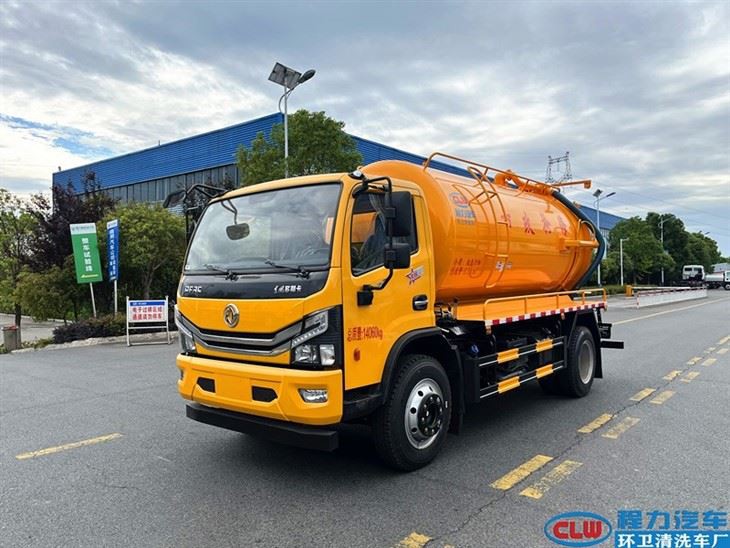
Now that you know about the different types of level sensors, let's talk about how they're used in sewage trucks.
In most sewage trucks, the level sensors are connected to a control panel in the cab of the truck. The control panel displays the level of the sewage in the tank, as well as any alarms or warnings. The operator can then use this information to make decisions about when to empty the tank.
Some sewage trucks also have a remote monitoring system, which allows the operator to monitor the level of the sewage in the tank from a distance. This is useful for large fleets of trucks or for trucks that are operating in remote areas.
So, why should you choose a sewage truck with level sensors? Well, as I mentioned earlier, level sensors are important for safety and efficiency. They can help prevent overflows, which can save you time and money in the long run. They can also help you plan your routes better, which can increase your productivity.
If you're in the market for a sewage truck, I highly recommend choosing one with level sensors. At our company, we offer a wide range of sewage trucks with different types of level sensors. You can check out our Sewage Vacuum Truck for more details.
We also offer a variety of other features and options to meet your specific needs. Whether you're looking for a small, compact sewage truck or a large, heavy-duty one, we have the perfect solution for you.
If you're interested in learning more about our sewage trucks or have any questions, please don't hesitate to contact us. We'd be happy to help you find the right sewage truck for your business.
In conclusion, level sensors are an essential part of any sewage truck. They help ensure safety and efficiency, and can save you time and money in the long run. If you're in the market for a sewage truck, make sure you choose one with level sensors. And if you need any help or have any questions, don't hesitate to reach out to us.
References:
- "Level Sensors: Types and Applications" - Industrial Automation Handbook
- "Sewage Truck Technology and Maintenance" - Waste Management Journal