


As a seasoned supplier of Sewage Vacuum Trucks, I've witnessed firsthand the evolution of these essential machines. Sewage vacuum trucks play a crucial role in maintaining public health and environmental cleanliness by efficiently removing and transporting sewage, sludge, and other liquid waste from various locations. One of the key aspects that determine the performance and reliability of these trucks is their power sources. In this blog post, I'll delve into the different power sources available for sewage vacuum trucks, exploring their advantages, disadvantages, and applications.
Diesel Engines
Diesel engines have long been the most common power source for sewage vacuum trucks. These engines are known for their durability, high torque output, and fuel efficiency. Diesel fuel has a higher energy density than gasoline, which means that diesel engines can produce more power per unit of fuel consumed. This makes them ideal for heavy-duty applications such as sewage vacuum trucks, which require a significant amount of power to operate the vacuum pump and other components.
One of the main advantages of diesel engines is their reliability. Diesel engines are built to withstand high compression ratios and heavy loads, making them less prone to breakdowns and requiring less maintenance compared to gasoline engines. Additionally, diesel engines have a longer lifespan, which can result in lower operating costs over the long term.
Another advantage of diesel engines is their fuel efficiency. Diesel engines typically achieve better fuel economy than gasoline engines, especially in heavy-duty applications. This can result in significant cost savings for sewage vacuum truck operators, especially when considering the high fuel consumption of these vehicles.
However, diesel engines also have some disadvantages. One of the main drawbacks is their emissions. Diesel engines produce higher levels of particulate matter and nitrogen oxides (NOx) compared to gasoline engines, which can have a negative impact on air quality and human health. To address this issue, many modern diesel engines are equipped with advanced emission control technologies, such as diesel particulate filters (DPFs) and selective catalytic reduction (SCR) systems, to reduce their emissions.
Another disadvantage of diesel engines is their noise level. Diesel engines are generally louder than gasoline engines, which can be a nuisance for operators and nearby residents. To reduce noise levels, many sewage vacuum trucks are equipped with noise-reducing features, such as insulated cabins and mufflers.
Gasoline Engines
Gasoline engines are another option for sewage vacuum trucks. These engines are typically less expensive than diesel engines and are easier to maintain. Gasoline engines also produce lower emissions than diesel engines, which can be an advantage in areas with strict air quality regulations.
One of the main advantages of gasoline engines is their smooth operation. Gasoline engines are generally quieter and smoother than diesel engines, which can provide a more comfortable driving experience for operators. Additionally, gasoline engines are lighter than diesel engines, which can result in better fuel economy and improved handling.
Another advantage of gasoline engines is their availability. Gasoline is more widely available than diesel fuel, which can be an advantage in areas where diesel fuel is not readily accessible.
However, gasoline engines also have some disadvantages. One of the main drawbacks is their lower torque output compared to diesel engines. Gasoline engines typically have a lower compression ratio than diesel engines, which means that they produce less torque at low speeds. This can make them less suitable for heavy-duty applications such as sewage vacuum trucks, which require a significant amount of torque to operate the vacuum pump and other components.
Another disadvantage of gasoline engines is their lower fuel efficiency compared to diesel engines. Gasoline engines typically achieve lower fuel economy than diesel engines, especially in heavy-duty applications. This can result in higher operating costs for sewage vacuum truck operators, especially when considering the high fuel consumption of these vehicles.
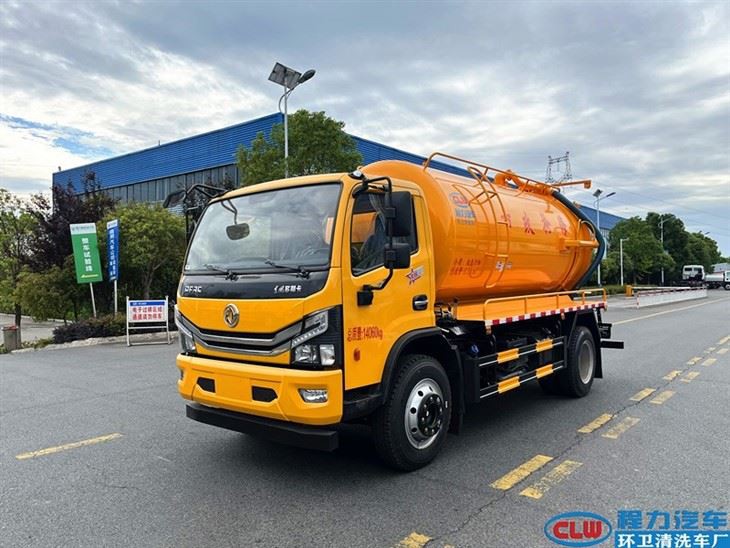

Natural Gas Engines
Natural gas engines are a relatively new option for sewage vacuum trucks. These engines use compressed natural gas (CNG) or liquefied natural gas (LNG) as fuel, which is a cleaner and more environmentally friendly alternative to diesel and gasoline.
One of the main advantages of natural gas engines is their lower emissions. Natural gas engines produce significantly lower levels of particulate matter, nitrogen oxides (NOx), and carbon monoxide (CO) compared to diesel and gasoline engines. This can have a positive impact on air quality and human health, especially in urban areas.
Another advantage of natural gas engines is their lower fuel cost. Natural gas is generally less expensive than diesel and gasoline, which can result in significant cost savings for sewage vacuum truck operators. Additionally, natural gas is a domestic fuel source, which can reduce dependence on foreign oil.
However, natural gas engines also have some disadvantages. One of the main drawbacks is their limited range. Natural gas engines typically have a shorter range than diesel and gasoline engines, which can be a limitation for sewage vacuum truck operators who need to travel long distances.
Another disadvantage of natural gas engines is their higher upfront cost. Natural gas engines are generally more expensive than diesel and gasoline engines, which can make them less accessible for some sewage vacuum truck operators. Additionally, natural gas refueling infrastructure is not as widely available as diesel and gasoline refueling stations, which can be a challenge for operators who need to refuel their vehicles on the go.
Electric Engines
Electric engines are a relatively new and emerging option for sewage vacuum trucks. These engines use electricity as a power source, which is a clean and sustainable alternative to fossil fuels.
One of the main advantages of electric engines is their zero emissions. Electric engines produce no tailpipe emissions, which can have a significant positive impact on air quality and human health, especially in urban areas.
Another advantage of electric engines is their lower operating cost. Electric vehicles typically have lower fuel and maintenance costs compared to diesel and gasoline vehicles, which can result in significant cost savings for sewage vacuum truck operators over the long term.
However, electric engines also have some disadvantages. One of the main drawbacks is their limited range. Electric engines typically have a shorter range than diesel and gasoline engines, which can be a limitation for sewage vacuum truck operators who need to travel long distances.
Another disadvantage of electric engines is their longer charging time. Electric vehicles typically take longer to charge than diesel and gasoline vehicles, which can be a challenge for operators who need to quickly refuel their vehicles. Additionally, the availability of charging infrastructure is still limited in many areas, which can make it difficult for operators to find a convenient place to charge their vehicles.
Conclusion
In conclusion, there are several power sources available for sewage vacuum trucks, each with its own advantages and disadvantages. Diesel engines are the most common power source and are known for their durability, high torque output, and fuel efficiency. Gasoline engines are less expensive and easier to maintain, but have lower torque output and fuel efficiency. Natural gas engines are a cleaner and more environmentally friendly alternative to diesel and gasoline, but have limited range and higher upfront cost. Electric engines are a clean and sustainable alternative to fossil fuels, but have limited range and longer charging time.
As a sewage vacuum truck supplier, I understand the importance of choosing the right power source for your specific needs. When selecting a power source, it's important to consider factors such as performance, reliability, fuel efficiency, emissions, and cost. By carefully evaluating these factors, you can choose the power source that best meets your requirements and helps you achieve your operational goals.
If you're interested in learning more about sewage vacuum trucks and their power sources, or if you're looking to purchase a sewage vacuum truck for your business, please don't hesitate to contact us. Our team of experts is available to answer your questions and provide you with the information you need to make an informed decision. We look forward to working with you and helping you find the perfect sewage vacuum truck for your needs.
References
- SAE International. (2023). Power Sources for Commercial Vehicles. Retrieved from https://www.sae.org/
- Environmental Protection Agency (EPA). (2023). Clean Air Technologies for Heavy-Duty Vehicles. Retrieved from https://www.epa.gov/
- International Council on Clean Transportation (ICCT). (2023). Zero-Emission Commercial Vehicles: Technologies and Market Trends. Retrieved from https://www.theicct.org/


