


Can a Foam Fire Truck be Used for Underground Fires?
As a supplier of Foam Fire Trucks, I often receive inquiries about the applicability of our products in various fire - fighting scenarios, one of the most debated being underground fires. In this blog, I will delve into the scientific aspects of using a foam fire truck for underground fires, weighing the pros and cons.
Understanding Underground Fires
Underground fires are a complex and challenging type of fire incident. They can occur in coal mines, underground parking lots, subway tunnels, and utility tunnels. These fires are difficult to access, and the confined spaces often lead to the accumulation of toxic gases and limited oxygen supply. The heat generated can be trapped, causing high - temperature zones that are hard to reach and cool down.
How Foam Fire Trucks Work
Foam fire trucks are equipped with specialized foam - generating systems. The foam is created by mixing a foam concentrate with water and air. There are different types of foam, such as AFFF (Aqueous Film - Forming Foam), FFFP (Film - Forming Fluoroprotein Foam), and AR - AFFF (Alcohol - Resistant Aqueous Film - Forming Foam). Each type has its own unique properties and is suitable for different fire classes.
When applied to a fire, the foam forms a blanket over the fuel surface. This blanket has several functions: it smothers the fire by cutting off the oxygen supply, cools the fuel and surrounding areas, and prevents the evaporation of the fuel, thus stopping the fire from spreading.

Advantages of Using Foam Fire Trucks for Underground Fires
- Smothering Effect
- In underground fires, especially those involving flammable liquids or combustible materials, the foam can quickly smother the flames. For example, in an underground parking lot where there may be fuel spills from vehicles, the foam can form a thick layer over the spilled fuel, preventing the fire from reigniting. The confined space in underground areas can actually enhance the smothering effect as the foam is less likely to be dispersed by wind.
- Cooling Effect
- The water content in the foam helps to cool down the hot surfaces. In coal mines, where fires can generate extremely high temperatures, the cooling effect of the foam can prevent the coal from further combustion and reduce the risk of spontaneous ignition. The foam can penetrate into small crevices and cool the surrounding rock or coal, which is crucial in preventing the fire from spreading underground.
- Toxic Gas Suppression
- Foam can also help in suppressing the release of toxic gases. Many underground fires, such as those in utility tunnels where there may be electrical equipment on fire, can produce toxic fumes like carbon monoxide and sulfur dioxide. The foam can act as a barrier, reducing the dispersion of these gases and protecting the fire - fighting personnel.
Challenges of Using Foam Fire Trucks for Underground Fires
- Access and Maneuverability
- Underground spaces often have limited access points. Fire trucks may have difficulty reaching the fire site, especially in narrow tunnels or mines. Even if the truck can get close, the turning radius and space for operation may be restricted. For example, in a subway tunnel, the tracks and platforms may limit the movement of the fire truck, making it difficult to position the truck for an effective foam application.
- Ventilation and Foam Dispersal
- Proper ventilation is essential for underground fires. However, the ventilation systems in underground areas may be disrupted during a fire. Without proper ventilation, the foam may not disperse evenly, and the toxic gases may not be effectively removed. In some cases, the ventilation may also blow the foam away, reducing its effectiveness.
- Foam Contamination
- The underground environment may be dirty and contain various contaminants. These contaminants can mix with the foam, reducing its quality and fire - fighting effectiveness. For example, in a coal mine, the coal dust can contaminate the foam, making it less stable and less able to form a proper blanket over the fire.
Case Studies
There have been several real - world examples of using foam fire trucks in underground fires. In a large underground parking lot fire, a Foam Fire Truck was able to quickly respond. The foam was applied to the burning vehicles, and within minutes, the flames were significantly reduced. The smothering effect of the foam prevented the fire from spreading to other vehicles, and the cooling effect helped to lower the temperature in the parking lot.
On the other hand, in a coal mine fire, although the foam was initially effective in cooling the burning coal, the limited access and ventilation problems made it difficult to completely extinguish the fire. The fire - fighting team had to use additional methods, such as sealing off the fire area and using water - based sprays in combination with the foam.
Our Foam Fire Truck Offerings
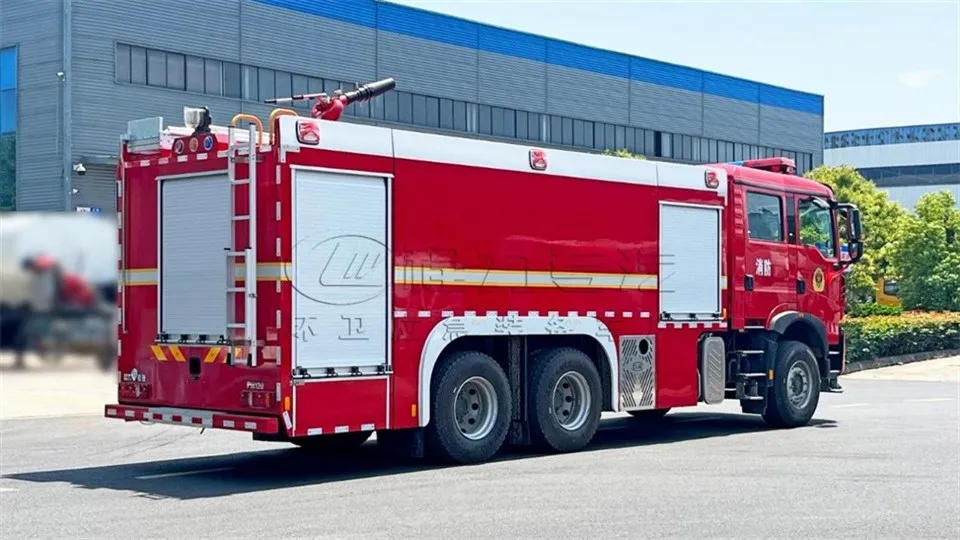
At our company, we offer a range of Foam Fire Trucks, including the highly reliable Foam Fire Truck. Our trucks are designed with advanced foam - generating systems that can produce high - quality foam for different fire scenarios. We also have trucks with various capacities to meet the needs of different customers.
For larger - scale operations, our Sinotruk HOWO 16 - ton Pumper - Tanker is a great option. It has a large water and foam storage capacity, which is suitable for long - term fire - fighting operations, including those in underground areas.
Conclusion
In conclusion, a foam fire truck can be a valuable asset in fighting underground fires, but it also faces several challenges. The advantages of smothering, cooling, and toxic gas suppression make it a viable option, but the issues of access, ventilation, and foam contamination need to be carefully considered.
If you are in the market for a Foam Fire Truck for your fire - fighting needs, whether it's for underground fires or other scenarios, we are here to help. Our team of experts can provide you with detailed information about our products and offer solutions tailored to your specific requirements. Contact us for a consultation and let's discuss how our Foam Fire Trucks can meet your fire - fighting challenges.
References
- NFPA (National Fire Protection Association) Standards on Fire - Fighting Equipment and Underground Fire Safety.
- Research papers on underground fire - fighting techniques and the use of foam in confined spaces from academic journals such as the Journal of Fire Science.
- Case studies and reports from fire departments around the world on their experiences with using foam fire trucks in underground fires.


