


Hey there! I'm from a sprinkler tanker supplier, and today I wanna chat about the fuel consumption rates of sprinkler tankers. It's a topic that's super important for anyone thinking about buying one of these bad boys, whether you're in charge of keeping the streets clean, watering gardens, or handling some other kind of large - scale water - related job.
First off, let's understand what a sprinkler tanker is. You can check out more details about Sprinkler Tanker on our website. These vehicles are basically big trucks with a water tank and a sprinkling system. They're used in a whole bunch of scenarios, like street cleaning, dust suppression at construction sites, and even agricultural irrigation.
Now, the fuel consumption rate of a sprinkler tanker isn't set in stone. It can vary based on a bunch of factors. One of the biggest factors is the size of the tanker. Larger tankers usually have bigger engines to carry the extra weight of the water and the tank itself. For example, a small - scale sprinkler tanker with a capacity of around 5 - 10 cubic meters might have a relatively lower fuel consumption rate compared to a massive 20 - cubic - meter behemoth.
The engine type also plays a huge role. Diesel engines are commonly used in sprinkler tankers because they're powerful and can handle heavy loads. However, diesel engines can have different fuel efficiencies depending on their design and technology. Newer engines with advanced fuel injection systems and emission - control technologies tend to be more fuel - efficient than older models.

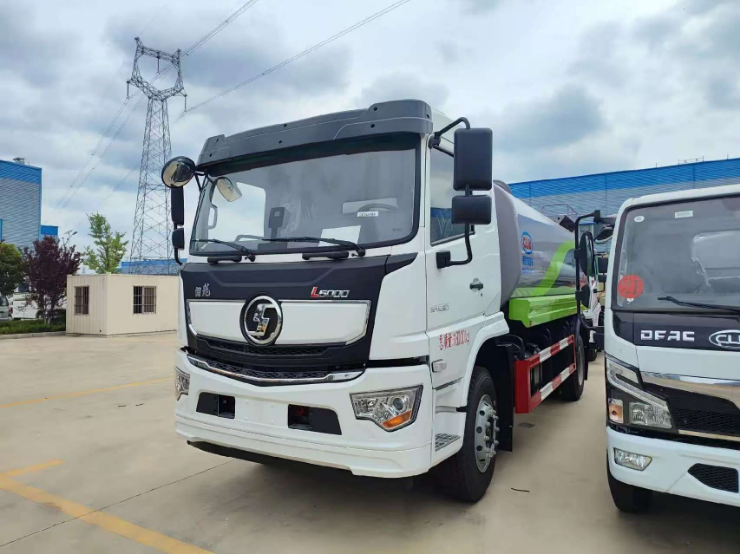
Another factor is the driving conditions. If the tanker is constantly starting and stopping in city traffic, it's going to use more fuel than if it's cruising on a highway. Stop - and - go traffic means the engine has to work harder to accelerate and decelerate, burning more fuel in the process. Also, driving on hilly terrain requires more power from the engine, which leads to increased fuel consumption.
The operation of the sprinkling system itself can impact fuel usage. When the sprinklers are on, the engine has to power the water pump. The higher the water pressure and flow rate you need, the more energy the pump will consume, and thus, the more fuel the engine will burn. For instance, if you're using the tanker for heavy - duty dust suppression at a construction site and need a high - pressure spray, you'll notice a significant increase in fuel consumption compared to a light - duty street - watering job.
Let's talk numbers. On average, a medium - sized sprinkler tanker (around 10 - 15 cubic meters) might consume anywhere from 20 to 30 liters of fuel per 100 kilometers when the sprinkling system is off and the truck is just driving. When the sprinklers are turned on, this consumption can increase by 10% - 30%, depending on the water flow rate and pressure.
A larger tanker, say 20 - 25 cubic meters, could consume 30 - 40 liters per 100 kilometers without the sprinklers running. And with the sprinklers in operation, the consumption can go up to 40 - 50 liters per 100 kilometers. These are just rough estimates, and the actual numbers can vary based on the factors we discussed earlier.
Now, you might be wondering how you can reduce the fuel consumption of a sprinkler tanker. Well, proper maintenance is key. Keeping the engine tuned up, changing the oil regularly, and ensuring the tires are properly inflated can all improve fuel efficiency. Using the right type of fuel and following the manufacturer's recommended maintenance schedule can make a big difference.
Another tip is to optimize the sprinkling operation. Only use the amount of water you actually need. If you can adjust the water flow rate and pressure according to the job requirements, you can save a significant amount of fuel. For example, if you're watering a small park, there's no need to use the same high - pressure settings as you would for a large construction site.
If you're in the market for a sprinkler tanker, you might also be interested in our 10cbm Sewage Suction Truck. It's a great option for those who need to handle sewage and other liquid waste in addition to water - related tasks. And if you prefer a more compact and maneuverable option, take a look at our Sprinkler Truck.
At the end of the day, understanding the fuel consumption rates of sprinkler tankers is crucial for making an informed decision when purchasing one. You want to make sure you're getting a vehicle that fits your budget in terms of both the initial purchase price and the long - term fuel costs.
If you're interested in learning more about our sprinkler tankers or have any questions regarding fuel consumption, don't hesitate to reach out. We're here to help you find the perfect vehicle for your needs and answer all your queries. Whether you're a small - scale contractor or a large - scale municipality, we've got the right sprinkler tanker for you. So, let's start a conversation and see how we can work together to get you the best equipment for your job.
References
- General knowledge about vehicle engineering and operation
- Industry reports on the performance of sprinkler tankers


